Dr. Parvin Shafa | July 8, 2026
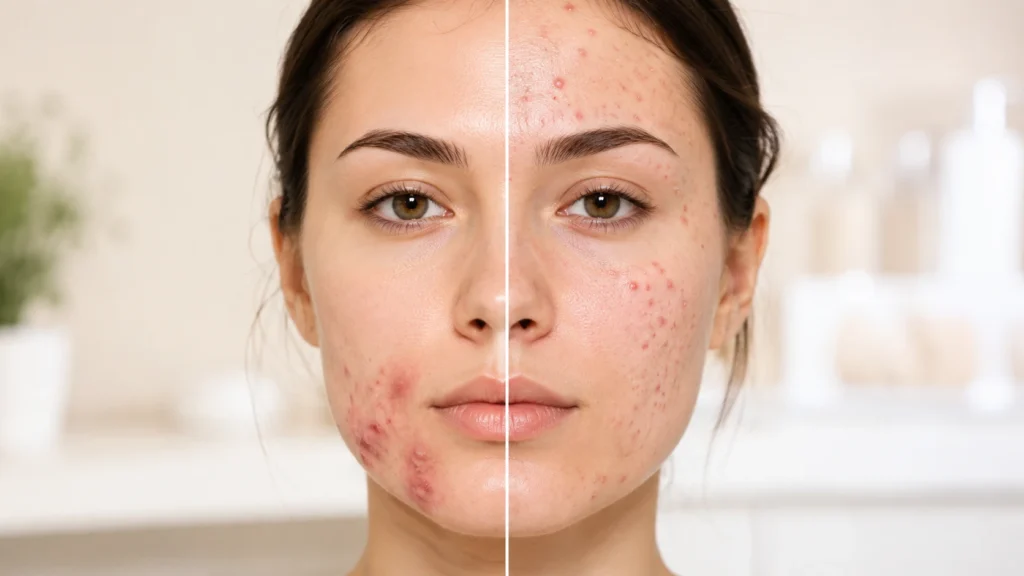
Acne is one of the most common skin conditions, but not all acne has the same cause. Two of the most common types are hormonal acne and bacterial acne. Although they can look similar, they develop for different reasons and often require different treatment approaches.
Understanding the difference can help you choose the right treatment and avoid wasting time and money on products that may not work for your skin.
At OC MedDerm in Irvine, CA, Dr. Parvin Shafa provides personalized acne treatment plans based on the underlying cause of your breakouts rather than using a one-size-fits-all approach.
Hormonal acne develops when fluctuations in hormone levels increase oil (sebum) production within the skin. Excess oil can clog pores and create an environment where acne-causing bacteria thrive, leading to inflammation and breakouts.
Hormonal acne commonly affects:
Unlike occasional pimples, hormonal acne often becomes a recurring condition that returns even after temporary improvement.
Bacterial acne develops when clogged pores become inflamed due to the overgrowth of Cutibacterium acnes (formerly Propionibacterium acnes), a bacterium that naturally lives on healthy skin.
When excess oil, dead skin cells, and bacteria become trapped inside pores, inflammation develops, resulting in acne lesions.
Bacterial acne may occur even without significant hormonal changes and is often influenced by:
| Feature | Hormonal Acne | Bacterial Acne |
|---|---|---|
| Primary Cause | Hormone fluctuations | Bacterial overgrowth in clogged pores |
| Common Age | Teens and adults | Any age |
| Common Location | Chin, jawline, lower cheeks, neck | Forehead, nose, cheeks, back, chest |
| Pattern | Cyclical, often around menstrual periods | Can occur anytime |
| Lesion Type | Deep, painful cysts and nodules | Whiteheads, blackheads, papules, pustules |
| Recurrence | Frequently returns | Often improves with proper acne treatment |
Hormonal acne most commonly develops on the:
These breakouts are often:
Many patients notice worsening acne shortly before their menstrual cycle.
Bacterial acne may occur almost anywhere oil glands are abundant, including:
These breakouts often include:
Yes.
Many patients have both hormonal and bacterial components contributing to their acne.
For example:
Because multiple factors are involved, successful treatment often requires addressing more than one cause.
A dermatologist evaluates several factors, including:
A thorough skin examination helps determine the most appropriate treatment plan.
Treatment depends on severity and individual health factors.
Options may include:
The goal is to reduce new breakouts while minimizing future scarring.
Bacterial acne may respond to:
Treatment plans are customized based on acne severity and skin type.
Yes.
Both hormonal and bacterial acne can lead to permanent acne scars if inflammation extends into deeper layers of the skin.
Early treatment reduces the risk of:
Treating acne promptly is often easier than treating scars later.
Consider scheduling an evaluation if:
Early diagnosis can help prevent long-term skin damage.
Whether your acne is caused by hormones, bacteria, or a combination of both, receiving an accurate diagnosis is the first step toward clearer skin.
At OC MedDerm, Dr. Parvin Shafa develops personalized acne treatment plans based on your skin type, acne severity, and underlying causes. From prescription therapies and chemical peels to advanced treatments for acne scars, we focus on achieving healthier skin while helping reduce the risk of future breakouts.
If you’re struggling with persistent acne, schedule a consultation to learn which treatment options may be right for you.
Yes. Hormonal acne is primarily triggered by hormone fluctuations that increase oil production, while bacterial acne develops when clogged pores become inflamed due to acne-causing bacteria.
Hormonal acne commonly appears on the chin, jawline, and lower face as deep, painful bumps that often flare around the menstrual cycle. A dermatologist can help determine the underlying cause.
Yes. Hormonal acne often begins with increased oil production, which can clog pores and allow bacteria to multiply, leading to inflamed acne lesions.
No. Acne is not contagious. The bacteria involved naturally live on the skin and become problematic only when pores become clogged and inflamed.
Yes. Most patients respond well to personalized treatment plans that address the underlying causes of their acne. Treatment may include prescription medications, chemical peels, laser treatments, or other dermatologist-recommended therapies.
You should see a dermatologist if your acne is painful, leaves scars, does not improve with over-the-counter products, or continues to recur despite treatment.
Book a consultation at OC Medderm | Irvineskin Today for Medical, Surgical, and Cosmetic Dermatology in Irvine & Orange County, CA.
We are experts in Acne, Pinch blepharoplasty, Ear lobe repair, Xanthelasma repair, Syringomas removal, mole removal, Keloid removal, Body and face piecing or piercing repair or removal, lump and bumps removal, Acne scar removal, Spider vein treatment, fungal infection, Co2 resurfacing, Warts and more.
You can schedule an appointment or call us now for all the dermatology treatments. We are located at 113 Waterworks Way 100, Irvine, Orange County CA, We Are Dedicated to Providing the Best & Transparent Dermatology Care for your skin.
Call us when you want!