Dr. Parvin Shafa | July 17, 2026
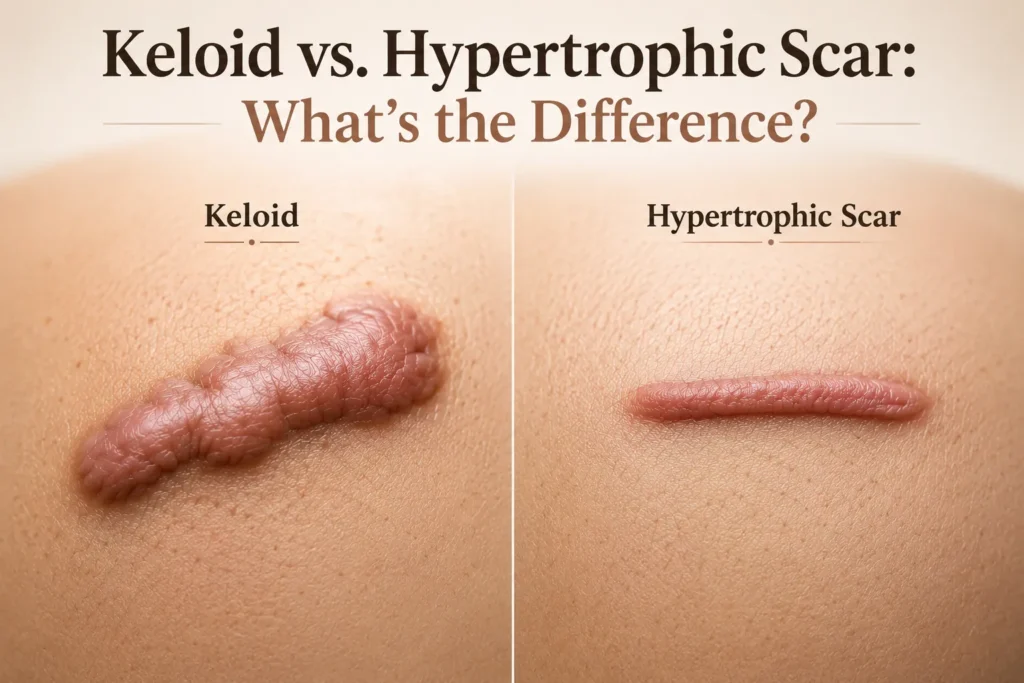
Keloids and hypertrophic scars are both raised scars that develop after the skin heals from an injury. While they may appear similar, they behave differently and often require different treatment approaches. Understanding the difference is important because early diagnosis can help improve treatment outcomes and prevent unnecessary scar growth.
At OC MedDerm in Irvine, CA, Dr. Parvin Shafa evaluates raised scars and develops personalized treatment plans based on the type of scar, its location, and your individual skin.
A keloid is an overgrowth of scar tissue that extends beyond the boundaries of the original wound. Unlike normal scars, keloids continue growing even after the skin has healed.
Keloids may develop after:
They can become itchy, painful, tender, or cosmetically bothersome.
A hypertrophic scar is a raised scar that develops during the normal healing process. Unlike a keloid, it remains confined to the original wound and often improves over time.
Hypertrophic scars commonly occur after:
Many gradually flatten over several months without becoming larger.
| Feature | Keloid | Hypertrophic Scar |
|---|---|---|
| Growth | Extends beyond the original wound | Stays within the original wound |
| Appearance | Thick, firm, raised | Raised but confined |
| Progression | Continues to grow | Usually stabilizes and gradually flattens |
| Symptoms | May itch, hurt, or feel tender | May be mildly itchy or uncomfortable |
| Common Locations | Ears, chest, shoulders, jawline | Anywhere skin has been injured |
| Recurrence | Higher risk after treatment | Lower recurrence risk |
Both scar types develop when the body produces excess collagen during healing.
However:
Genetics also play an important role. People with a personal or family history of keloids have a greater risk of developing them.
You may have a keloid if your scar:
You may have a hypertrophic scar if it:
A dermatologist can often distinguish between the two through a clinical examination. In some cases, additional evaluation may be recommended.
Treatment depends on the size, location, and severity of the keloid.
Options may include:
Because keloids often return, combination treatment usually provides the best results.
Many hypertrophic scars improve naturally over time.
When treatment is needed, options may include:
Treatment is individualized based on the scar’s appearance and symptoms.
While not all raised scars can be prevented, you can reduce your risk by:
Schedule an evaluation if you have:
Early evaluation may help prevent further scar enlargement and improve treatment outcomes.
Whether you have a keloid or a hypertrophic scar, an accurate diagnosis is the first step toward effective treatment.
At OC MedDerm, Dr. Parvin Shafa provides personalized treatment plans for raised scars using advanced therapies tailored to each patient’s needs. If you’re concerned about a scar that continues to grow or causes discomfort, schedule a consultation to discuss your treatment options.
No. Although they may look similar, hypertrophic scars and keloids are different types of scars with distinct healing patterns.
No. Keloids typically do not shrink without treatment and may continue to grow over time.
Keloids are usually benign but can cause itching, pain, tenderness, and cosmetic concerns.
Keloids have a higher risk of recurrence than hypertrophic scars, which is why combination therapy is often recommended.
Diagnosis is usually based on your medical history and a physical examination. In some cases, a biopsy may be recommended if the diagnosis is uncertain.
Yes. Many raised scars improve with non-surgical treatments such as steroid injections, cryotherapy, laser therapy, or silicone therapy.
Book a consultation at OC Medderm | Irvineskin Today for Medical, Surgical, and Cosmetic Dermatology in Irvine & Orange County, CA.
We are experts in Acne, Pinch blepharoplasty, Ear lobe repair, Xanthelasma repair, Syringomas removal, mole removal, Keloid removal, Body and face piecing or piercing repair or removal, lump and bumps removal, Acne scar removal, Spider vein treatment, fungal infection, Co2 resurfacing, Warts and more.
You can schedule an appointment or call us now for all the dermatology treatments. We are located at 113 Waterworks Way 100, Irvine, Orange County CA, We Are Dedicated to Providing the Best & Transparent Dermatology Care for your skin.
Call us when you want!