Dr. Parvin Shafa | June 17, 2026
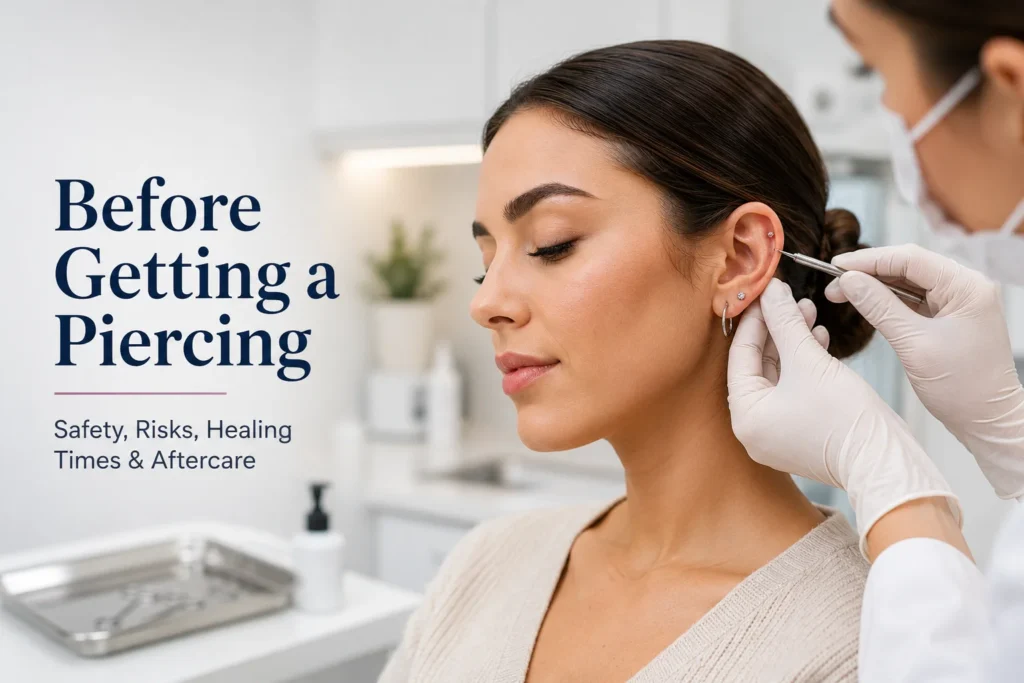
Body piercing is a popular form of self-expression, but it is still a medical procedure that carries potential risks. Choosing a qualified provider, understanding proper aftercare, and recognizing early signs of complications can significantly improve healing outcomes. At OC MedDerm in Irvine, we educate patients about safe piercing practices, jewelry selection, infection prevention, and long-term skin health. This guide explains what you should know before getting a piercing, how to care for a new piercing, and when to seek medical attention.
choosing a qualified practitioner who follows proper sterilization protocols, particularly the use of autoclaves to sterilize piercing instruments and single-use, disposable piercing devices. Never let a piercing gun be used, as they cause tissue crush injury and are difficult to sterilize.
Most importantly, a provider who will be available and helpful in the event of complications after piercing, which occur in up to 10–30% of piercings.
Choose a reliable facility that provides a formal consent process that includes discussion of risks and complications. Minors should not undergo piercing without written consent and the presence of a parent or guardian.
Maintaining a record of the metal composition of inserted jewelry is important. At OC MedDerm, we use jewelry made from safe materials and keep a record of what type you have.
Identify and avoid any risk of metal or jewelry allergies for the selected jewelry.
Learn about your risk of keloid formation after piercing. appropriate jewelry selection.
Stop taking blood thinners, including NSAIDs, such as aspirin and Advil, which may increase the risk of bleeding and bruising after piercing
Be prepared and aware of recovery time and understand that the healing timeline for the chosen site varies significantly (ranging from 6 weeks for earlobes to up to 12 months for navel or cartilage piercings). Avoid piercing before vacation and water exposure.
Avoid piercing while under the influence of alcohol or drugs
Select biocompatible jewelry—surgical-grade stainless steel, titanium,
Complications are common, reported by nearly 50% of pierced individuals. People with a history of keloids, immune problems, or chronic skin conditions have a higher risk of complications. Here are common risks
Let the doctor know if you have any of the following medical issues so that appropriate care and precautions can be given.
Starting the day after piercing, wash your hands with soap and water, then clean the area around the piercing twice a day with a Q-tip, water, and a gentle, fragrance-free cleanser provided at the time of service. In the second week after piercing, daily showers are sufficient to keep the wound clean.
The day after the piercing, you may shower by briefly exposing it to clean running water. Let water run over the site gently; pat dry afterward.
Bathing (soaking in a tub): Avoid the first week after piercing. Prolonged soaking can macerate tissue and delay healing.
Submersion in pools, hot tubs, lakes, and oceans should be avoided until the piercing is fully healed, which can take 6 weeks to 12 months, depending on the site.
Do not remove or twist the jewelry during the initial healing period, the first 5 days after the procedure, to promote optimal tissue healing. Changing or removing jewelry too soon can cause the hole to close, get irritated, or become infected.
Once initial healing has begun, and local swelling or tenderness has subsided, gentle twisting and movement of the jewelry twice daily should be started and continued for earlobe piercings for 6–8 weeks and cartilage and body piercings for up to 12 weeks or longer, with ongoing monitoring for signs of infection or other complications
Healing times vary significantly, depending on the location: earlobes (6–8 weeks), cartilage (up to 12 weeks or longer), navel, nipple, and genital piercings may take several months.
See us or contact us at OC MedDerm as soon as possible for the following symptoms:
Infection: severe pain, spreading redness, fever, pus, warmth, swelling
Allergic reaction: itching, rash, redness, swelling, and pain
Keloid: A thick, growing scar at the site of piercing, possibly itching with discomfort
Bleeding: Pressure to stop bleeding is sufficient unless it is unusual and heavy
Early treatment is important for ear cartilage infections to prevent permanent damage.
Oral and nose piercings need extra care to avoid dental injuries or problems with eating and speaking.
If you have any questions or concerns, please feel free to call us during office hours. For after-hours, you may text Dr. Shafa at (949) 426-7744 for urgent matters only.
Please keep your follow-up appointment as recommended at the time of the procedure.
Book a consultation at OC Medderm | Irvineskin Today for Medical, Surgical, and Cosmetic Dermatology in Irvine & Orange County, CA.
We are experts in Acne, Pinch blepharoplasty, Ear lobe repair, Xanthelasma repair, Syringomas removal, mole removal, Keloid removal, Body and face piecing or piercing repair or removal, lump and bumps removal, Acne scar removal, Spider vein treatment, fungal infection, Co2 resurfacing, Warts and more.
You can schedule an appointment or call us now for all the dermatology treatments. We are located at 113 Waterworks Way 100, Irvine, Orange County CA, We Are Dedicated to Providing the Best & Transparent Dermatology Care for your skin.
Call us when you want!