Dr. Parvin Shafa | November 26, 2026
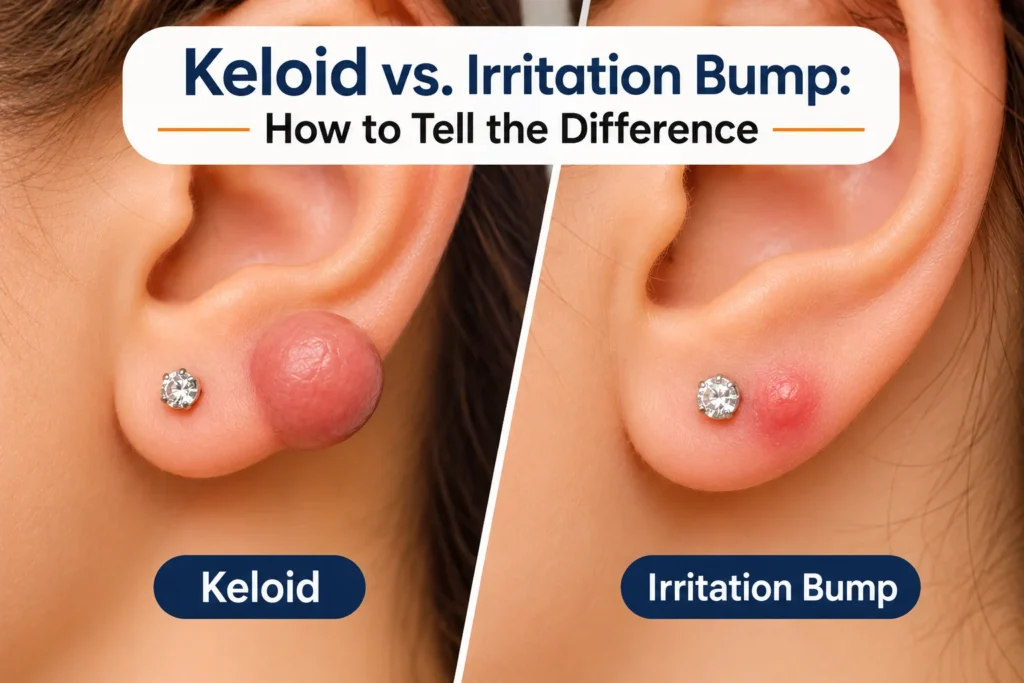
Noticing a raised bump around a new or existing piercing can be concerning. Whether it appears near an earlobe, cartilage piercing, nose piercing, or another area of the body, a small lump may cause discomfort, redness, or changes in the surrounding skin.
Two common possibilities are keloids and irritation bumps. Although they can sometimes look similar, they are different skin conditions with different causes and treatment approaches.
Understanding the difference between a keloid and an irritation bump can help you recognize what may be happening to your skin and determine when professional evaluation is necessary.
A keloid is a type of raised scar that develops when the body produces excessive collagen during the wound-healing process.
Instead of staying within the boundaries of the original injury, a keloid grows beyond the edges of the affected area. It may develop after an ear piercing, surgery, acne, burns, cuts, or other skin injuries.
Keloids can develop gradually over weeks or months and may continue growing over time.
Common characteristics of keloids include:
Keloids are more common in people with darker skin tones and may also run in families. However, they can develop in people of any skin tone.
Unlike ordinary scars, keloids generally do not disappear on their own and may require dermatological treatment.
An irritation bump is a small raised area that develops when the skin surrounding a piercing becomes irritated or inflamed.
It is not the same as a true keloid scar. Irritation bumps are often associated with friction, pressure, repeated movement, or sensitivity to jewelry materials.
They can appear near both new and older piercings.
Common characteristics of irritation bumps include:
Common triggers include:
Irritation bumps may improve when the underlying trigger is removed and appropriate aftercare is followed.
However, persistent swelling, warmth, increasing pain, or pus may indicate an infection rather than a simple irritation bump.
Although both conditions can cause raised skin around a piercing, several features can help distinguish them.
| Feature | Keloid | Irritation Bump |
| Main cause | Excessive collagen production during wound healing | Local irritation or inflammation |
| Appearance | Firm, raised, thickened scar | Usually smaller, localized bump |
| Growth pattern | Can extend beyond the original wound | Usually remains close to the piercing |
| Texture | Often firm or rubbery | May feel soft, tender, or inflamed |
| Symptoms | May itch, hurt, or feel tender | Often associated with redness or sensitivity |
| Development | May develop and enlarge over weeks or months | Can appear following repeated irritation |
| Natural progression | Often persists or continues growing | May improve when irritation is addressed |
| Treatment | May require medical scar treatment | Often improves with appropriate care and removal of triggers |
It is important to remember that appearance alone cannot always confirm the diagnosis. A dermatologist can examine the affected area and distinguish between a keloid, irritation bump, hypertrophic scar, cyst, or infection.
If you have noticed a bump around your ear or nose piercing, consider these differences.
1. Look at Its Growth Pattern
A keloid typically grows beyond the boundaries of the original piercing injury. An irritation bump generally stays close to the piercing opening.
2. Consider How It Feels
Keloids often feel firm or rubbery. Irritation bumps may be more tender, inflamed, or sensitive to touch.
3. Think About Recent Irritation
If the bump appeared after changing jewelry, sleeping on the piercing, or experiencing friction, irritation may be contributing to the problem.
4. Observe Whether It Changes Over Time
An irritation bump may become smaller when the source of irritation is addressed. A keloid may continue to grow or remain raised even after the original injury has healed.
These observations can provide useful clues, but they are not a substitute for a professional diagnosis.
An irritation bump does not automatically turn into a keloid.
They develop through different processes. Irritation causes localized inflammation, while a keloid results from an abnormal scar-healing response involving excessive collagen production.
However, repeated skin trauma and inflammation may contribute to wound-healing problems in people who are prone to keloid formation.
If you notice a bump that continues to enlarge, becomes firm, or extends beyond the original piercing site, consider having it evaluated by a dermatologist.
Keloids can be challenging to manage because they may return even after treatment. The appropriate approach depends on the size, location, symptoms, and growth pattern of the scar.
Common dermatological treatment options include:
1. Corticosteroid Injections
Intralesional corticosteroid injections are commonly used to help flatten keloids and reduce inflammation, itching, and discomfort.
Multiple treatment sessions may be needed depending on the size and response of the scar.
2. Cryotherapy
Cryotherapy uses controlled freezing to damage scar tissue and help reduce the size of certain keloids.
It may be used alone or alongside other treatments. Changes in skin pigmentation can occur, particularly in darker skin tones.
3. Laser Treatments
Certain laser treatments may help improve redness, thickness, and other characteristics of keloid scars. They are sometimes combined with other therapies to improve results.
4. Surgical Removal
Surgical removal may be considered for selected keloids, but surgery alone carries a significant risk of recurrence.
For this reason, dermatologists often recommend combining surgical removal with additional treatments to reduce the chance of the keloid returning.
5. Combination Therapy
Some keloids respond better to a combination of treatments, such as corticosteroid injections, cryotherapy, laser therapy, or other scar-management approaches.
A dermatologist can recommend a treatment plan based on the individual scar and the patient’s history of keloid formation.
Irritation bumps often improve when the source of irritation is identified and addressed.
Some helpful measures include:
Avoid removing jewelry yourself if an infection is suspected. Seek medical advice because removal may not be appropriate in every situation.
If the bump does not improve, continues growing, or becomes increasingly painful, consult a healthcare professional.
Not every piercing bump requires medical treatment, but certain changes should not be ignored.
Consider scheduling a dermatology consultation if:
Seek prompt medical evaluation if you experience increasing pain, warmth, spreading redness, significant swelling, fever, or pus, as these may indicate an infection.
Early evaluation can help identify the cause and prevent unnecessary irritation or inappropriate treatment.
Not all keloids can be prevented, particularly in people who are genetically predisposed to developing them. However, reducing unnecessary skin trauma may help lower the risk.
Consider these precautions:
If you have previously developed a keloid, inform your dermatologist before undergoing another procedure that may injure the skin.
A raised bump around a piercing may look like a keloid, but irritation, hypertrophic scarring, cysts, and infections can produce similar changes.
At OC MedDerm in Irvine, California, Dr. Parvin Shafa provides dermatological care for a range of medical, surgical, and cosmetic skin concerns.
A professional skin evaluation can help determine whether a raised bump is a keloid or another condition and identify appropriate treatment options based on its size, location, and severity.
If you have noticed a growing scar, persistent piercing bump, or unusual skin thickening, consider scheduling a consultation with OC MedDerm.
Contact OC MedDerm to discuss your skin concerns and explore appropriate dermatological treatment options in Irvine and Orange County.
A keloid typically feels firm or rubbery and grows beyond the original piercing site. An irritation bump is usually smaller and remains close to the piercing opening. A dermatologist can confirm the diagnosis through an examination.
Many irritation bumps improve once the underlying cause, such as friction, pressure, or jewelry sensitivity, is addressed. Persistent or worsening bumps should be evaluated by a healthcare professional.
Keloids generally do not disappear on their own. They may remain raised or continue growing over time, and dermatological treatment may help flatten or reduce them.
Keloids are not always painful, but some people experience itching, tenderness, sensitivity, or discomfort. Symptoms can vary depending on the size and location of the scar.
No. Attempting to pop, squeeze, or cut either type of bump can cause further irritation, bleeding, infection, or additional scarring. It is better to have the area evaluated by a professional.
Treatment depends on the size and severity of the keloid. Corticosteroid injections, cryotherapy, laser treatments, and surgical removal combined with additional therapies may be considered. A dermatologist can recommend an appropriate approach.
Keloids can persist for years without treatment. Some treatments can flatten or reduce them, but recurrence is possible. Ongoing follow-up may be necessary.
Medical Disclaimer: This article is for educational purposes only and does not replace professional medical advice, diagnosis, or treatment. A dermatologist should evaluate persistent or growing skin bumps to determine the underlying cause and recommend appropriate care.
Book a consultation at OC Medderm | Irvineskin Today for Medical, Surgical, and Cosmetic Dermatology in Irvine & Orange County, CA.
We are experts in Acne, Pinch blepharoplasty, Ear lobe repair, Xanthelasma repair, Syringomas removal, mole removal, Keloid removal, Body and face piecing or piercing repair or removal, lump and bumps removal, Acne scar removal, Spider vein treatment, fungal infection, Co2 resurfacing, Warts and more.
You can schedule an appointment or call us now for all the dermatology treatments. We are located at 113 Waterworks Way 100, Irvine, Orange County CA, We Are Dedicated to Providing the Best & Transparent Dermatology Care for your skin.
Call us when you want!