Dr. Parvin Shafa | November 19, 2026
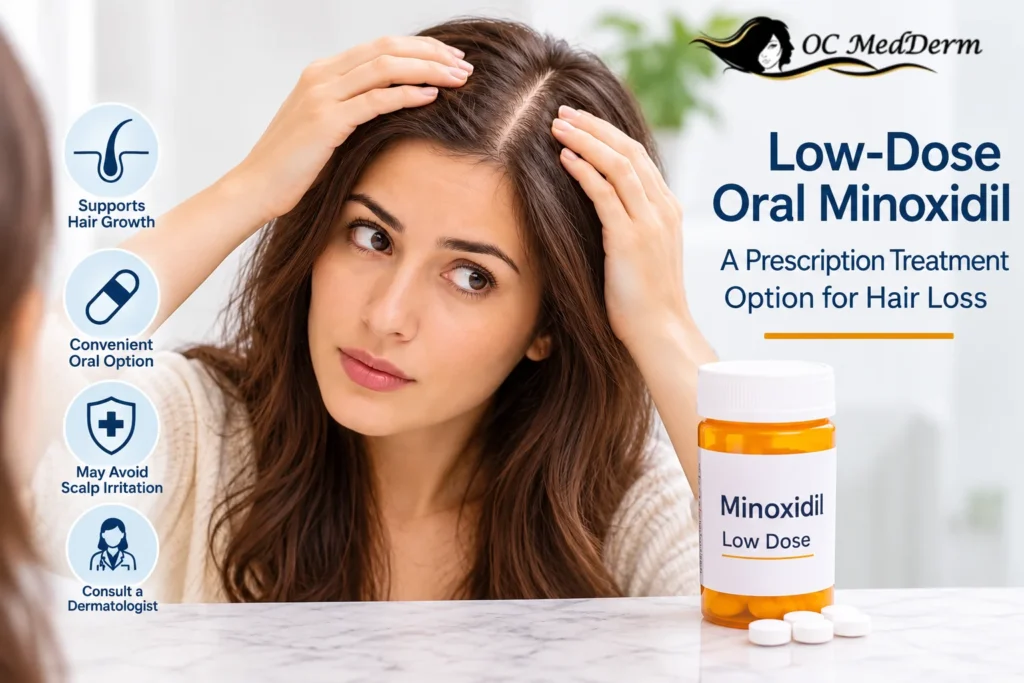
Hair loss can be frustrating, particularly when gradual thinning starts affecting hair density, appearance, and confidence. While topical treatments have long been used to manage pattern hair loss, some patients find daily scalp applications inconvenient or experience irritation from these products.
Low-dose oral minoxidil (LDOM) is another treatment option that dermatologists may consider for certain patients experiencing hair loss. Taken as a prescription tablet, it offers a convenient alternative to topical minoxidil and has shown comparable effectiveness in clinical research for androgenetic alopecia.
But how does oral minoxidil work, who may benefit from it, and what should patients know before considering this treatment?
Let’s take a closer look.
Minoxidil is a medication originally developed to treat high blood pressure. Its ability to support hair growth led to its use in hair loss treatments, including topical solutions and foams.
Low-dose oral minoxidil uses a much smaller oral dose of the medication for hair loss management. Although oral minoxidil is not FDA-approved specifically for hair loss, dermatologists may prescribe it off-label for selected patients after evaluating their condition and medical history.
It is commonly considered for androgenetic alopecia, also known as male or female pattern hair loss, which causes gradual hair thinning due to genetic and hormonal factors.
Unlike topical minoxidil, which is applied directly to the scalp, oral minoxidil works through systemic circulation.
Hair naturally goes through different growth stages, including the anagen (growth), catagen (transition), and telogen (resting) phases.
In people experiencing pattern hair loss, hair follicles gradually become smaller, producing finer and shorter hairs over time.
Minoxidil helps support the hair growth process by influencing hair follicle activity and promoting the growth phase.
With appropriate treatment, patients may experience:
Results vary depending on the individual, the underlying cause of hair loss, and their response to treatment.
Both oral and topical minoxidil are used to manage androgenetic alopecia. However, their administration and potential side effects differ.
A clinical trial published in JAMA Dermatology in 2024 compared oral minoxidil with topical 5% minoxidil in men with androgenetic alopecia. The findings showed that oral minoxidil was not superior to topical treatment after 24 weeks, but both demonstrated comparable overall effectiveness.
Here are some important differences:
1. Method of Application
Topical minoxidil is applied directly to the scalp, usually once or twice daily depending on the formulation and medical instructions.
Oral minoxidil is taken as a prescribed tablet, eliminating the need for daily scalp application.
2. Convenience
Some patients find topical treatments difficult to maintain because they require regular application and may leave residue or affect hair styling.
Oral treatment offers a simpler administration routine for patients who prefer taking medication rather than applying products to their scalp.
3. Scalp Irritation
Topical minoxidil can sometimes cause scalp itching, dryness, redness, or irritation.
Because oral minoxidil does not need to be applied directly to the scalp, it avoids these application-related scalp reactions. However, it has its own potential systemic side effects.
4. Cost Considerations
Depending on the prescription, formulation, and pharmacy, low-dose oral minoxidil may be less expensive than some topical treatments.
The actual cost varies, so patients should discuss treatment expenses with their dermatologist.
Neither option is automatically better for everyone. The appropriate choice depends on the patient’s hair loss pattern, medical history, treatment preferences, and response to previous therapies.
A dermatologist may consider low-dose oral minoxidil for patients who:
Not all types of hair loss respond in the same way. Hair shedding can also result from nutritional deficiencies, hormonal changes, medical conditions, stress, or other factors.
This is why identifying the underlying cause is an important step before starting treatment.
Although low-dose oral minoxidil may be beneficial for selected patients, it is not appropriate for everyone.
Patients with certain medical conditions may need to avoid this treatment, including those with:
Patients with other cardiovascular conditions, kidney problems, blood pressure fluctuations, or medications that may interact with minoxidil should discuss these concerns with their healthcare provider.
A thorough medical assessment helps determine whether the potential benefits outweigh the risks.
Like other prescription medications, oral minoxidil can cause side effects.
Some possible side effects include:
Rare but serious cardiovascular complications, including pericardial effusion, have also been reported with oral minoxidil.
Patients should contact their healthcare provider if they experience unusual symptoms. Chest pain, difficulty breathing, fainting, or significant swelling require prompt medical attention.
A dermatologist should review the patient’s medical history and determine appropriate monitoring before and during treatment.
Hair growth takes time, and patients should not expect immediate changes after starting treatment.
Some individuals may begin noticing improvements after approximately three to six months, although the timeline varies.
Consistent use as prescribed and regular follow-up appointments are important for evaluating treatment response.
Hair loss management is often a long-term process. A dermatologist can assess progress and determine whether the current treatment remains appropriate.
Hair loss is not a single condition, and choosing a treatment without identifying its underlying cause may lead to disappointing results.
A dermatologist can evaluate the scalp, examine the pattern of thinning, review medical history, and recommend appropriate diagnostic tests when necessary.
Based on these findings, the treatment plan may include topical minoxidil, low-dose oral minoxidil, other prescription medications, or a combination of suitable treatments.
Professional guidance is particularly important with oral minoxidil because it affects the body beyond the scalp and requires consideration of cardiovascular health and potential medication interactions.
If you are experiencing persistent hair thinning or pattern hair loss, understanding your treatment options is an important first step.
At OC MedDerm in Irvine, California, Dr. Parvin Shafa provides dermatological care for a range of skin, hair, and scalp concerns. An individualized evaluation can help identify the possible cause of hair loss and determine which treatment options may be appropriate for your needs.
Whether you are considering topical minoxidil, low-dose oral minoxidil, or another hair restoration approach, professional guidance can help you make an informed decision.
Schedule a consultation with OC MedDerm to discuss your hair loss concerns and explore available treatment options.
Low-dose oral minoxidil has demonstrated effectiveness in managing androgenetic alopecia. Research suggests that its overall effectiveness can be comparable to topical minoxidil, although individual results vary.
Neither treatment is universally better. Oral minoxidil may be more convenient for people who struggle with daily scalp applications or experience topical irritation. However, it also carries potential systemic side effects that require medical consideration.
Yes. Dermatologists may prescribe low-dose oral minoxidil off-label for selected patients experiencing certain types of hair loss. It should only be taken under appropriate medical supervision.
Yes. Dermatologists may prescribe low-dose oral minoxidil for women experiencing female pattern hair loss. However, it should be avoided during pregnancy and breastfeeding.
Possible side effects include unwanted facial or body hair growth, dizziness, headaches, fluid retention, and changes in heart rate or blood pressure. A dermatologist can explain the potential risks before treatment begins.
No. Oral minoxidil affects the cardiovascular system and is not suitable for everyone. A dermatologist should evaluate your hair loss, medical history, blood pressure, and potential risk factors before prescribing it.
Medical Disclaimer: This article is intended for educational purposes only and does not replace professional medical advice, diagnosis, or treatment. Low-dose oral minoxidil is an off-label treatment for hair loss. Never start, adjust, or discontinue prescription medication without consulting your healthcare provider.
Book a consultation at OC Medderm | Irvineskin Today for Medical, Surgical, and Cosmetic Dermatology in Irvine & Orange County, CA.
We are experts in Acne, Pinch blepharoplasty, Ear lobe repair, Xanthelasma repair, Syringomas removal, mole removal, Keloid removal, Body and face piecing or piercing repair or removal, lump and bumps removal, Acne scar removal, Spider vein treatment, fungal infection, Co2 resurfacing, Warts and more.
You can schedule an appointment or call us now for all the dermatology treatments. We are located at 113 Waterworks Way 100, Irvine, Orange County CA, We Are Dedicated to Providing the Best & Transparent Dermatology Care for your skin.
Call us when you want!