Dr. Parvin Shafa | November 24, 2026
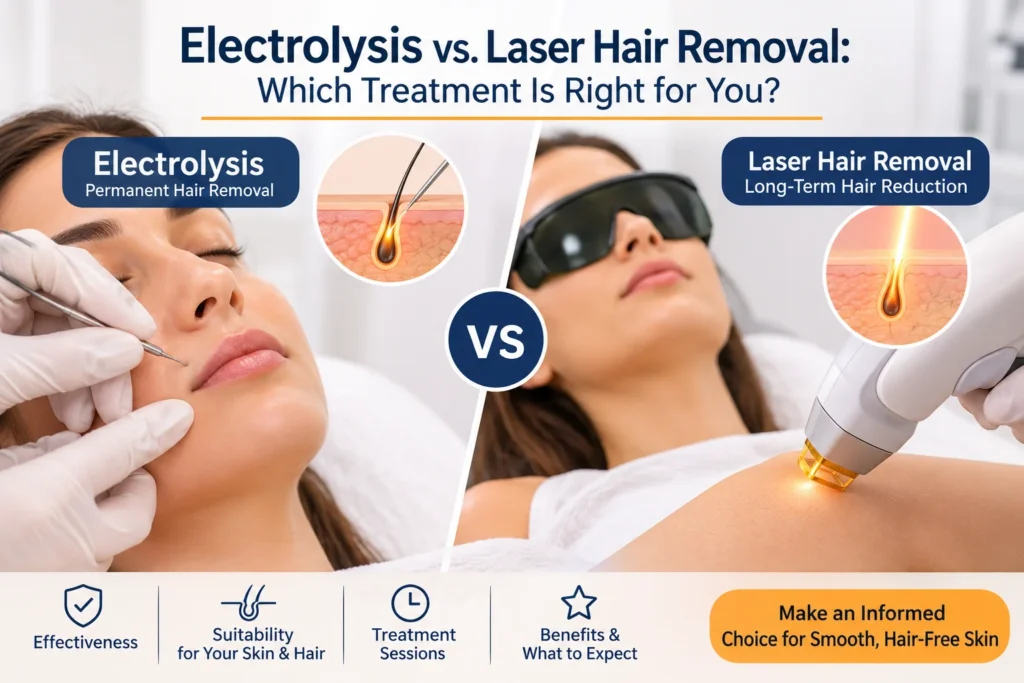
Unwanted hair can be frustrating, especially when shaving, waxing, threading, or other temporary hair removal methods require constant maintenance. If you are looking for a longer-lasting solution, two popular options worth understanding are electrolysis and laser hair removal.
Both treatments target hair follicles to reduce unwanted hair growth, but they work differently and offer different results. Electrolysis is designed to permanently remove individual hairs, while laser hair removal uses concentrated light energy to achieve long-term hair reduction over larger areas.
So, which option is better for your skin type, hair color, and treatment goals?
Understanding the differences between electrolysis and laser hair removal can help you make a more informed decision about your hair removal options.
Electrolysis is a hair removal technique that uses a small electrical current to damage the growth cells within individual hair follicles.
During the procedure, a trained professional inserts a very fine probe into the opening of each hair follicle. A controlled electrical current is then delivered to target the follicle and prevent future hair growth.
Because electrolysis treats individual hairs rather than an entire area at once, it is particularly useful for smaller areas where precise hair removal is desired.
Key benefits of electrolysis include:
However, electrolysis can be time-consuming because each follicle must be treated individually. Multiple appointments are generally necessary to address hairs as they enter the appropriate growth stage.
Laser hair removal is a light-based treatment that targets the pigment (melanin) in hair follicles.
During treatment, concentrated light energy is absorbed by the pigment in the hair. This energy produces heat, which damages the follicle and reduces its ability to produce hair.
Laser hair removal can treat larger areas of the body more quickly than electrolysis, making it a popular option for people who want to reduce unwanted hair on their legs, arms, underarms, back, chest, or bikini area.
Key benefits of laser hair removal include:
Laser hair removal generally requires several sessions because hair follicles respond best when they are in the active growth phase. Some patients may also need maintenance treatments to manage regrowth.
It is important to understand that laser hair removal is considered a method of permanent hair reduction, not guaranteed permanent removal of every hair.
Although both procedures target hair follicles, there are several differences to consider before choosing a treatment.
Electrolysis uses a fine probe and electrical current to target individual hair follicles.
Laser hair removal uses concentrated light energy absorbed by hair pigment to heat and damage multiple follicles within the treatment area.
The primary difference is that electrolysis treats hairs individually, while laser technology can treat a larger area during each session.
Hair color plays an important role when selecting a hair removal treatment.
Laser hair removal relies on melanin in the hair follicle to absorb light energy. This makes it most effective for pigmented hair, particularly darker hair.
It is generally less effective for blonde, white, gray, or red hair because these hair colors contain less of the pigment targeted by conventional hair removal lasers.
Electrolysis does not rely on hair pigmentation. It can therefore be used to treat unwanted hair regardless of its color.
Both treatments can be considered for different skin tones, but the approach differs.
Modern laser technology offers options for a broad range of skin tones. However, selecting the appropriate laser wavelength, settings, and treatment approach is essential to minimize the risk of burns and pigmentation changes.
Darker skin tones require particular care because the surrounding skin also contains melanin that may absorb laser energy.
Electrolysis works independently of skin and hair pigmentation, making it an option for people across different skin tones.
A professional assessment is important to determine which method is appropriate for your skin.
Neither treatment typically provides complete results in one appointment.
Hair grows in different cycles, and not every follicle is in the active growth phase at the same time.
Laser hair removal generally requires multiple sessions spaced several weeks apart. The number depends on the treatment area, hair characteristics, and individual response.
Electrolysis also requires repeated appointments because individual follicles must be treated as the hairs become accessible during their growth cycles.
However, electrolysis may require considerably more treatment time for larger areas because each hair is addressed separately.
The level of discomfort varies depending on the individual, treatment area, and personal sensitivity.
During laser hair removal, patients often describe the sensation as a quick snapping feeling against the skin, sometimes accompanied by warmth.
Electrolysis may produce a stinging, tingling, or brief heat sensation as individual follicles are treated.
Sensitive areas may feel more uncomfortable with either procedure. Your provider can discuss ways to manage discomfort before treatment.
Both treatments can cause temporary skin reactions.
Possible side effects of laser hair removal include:
Possible side effects of electrolysis include:
Following appropriate pre-treatment and aftercare instructions can help minimize complications.
| Feature | Electrolysis | Laser Hair Removal |
| Treatment method | Electrical current | Concentrated light energy |
| Main result | Permanent hair removal | Long-term hair reduction |
| Hair color | All hair colors | Best for pigmented hair |
| Skin tones | All skin tones | All skin tones with appropriate technology and settings |
| Treatment area | Small or individual areas | Small and large areas |
| Treatment time | Longer for larger areas | Generally faster for larger areas |
| Sessions | Multiple sessions | Multiple sessions |
| Maintenance | Usually unnecessary for successfully destroyed follicles | Maintenance may be needed |
| Best suited for | Individual hairs and smaller areas | Reducing hair across larger areas |
The best treatment often depends on the location, amount, and characteristics of unwanted hair.
Electrolysis may be worth considering for:
Laser hair removal may be worth considering for:
These are general considerations rather than strict rules. A professional evaluation can help determine the most appropriate approach for each area.
Yes. In certain situations, using both treatments may help address different hair removal needs.
For example, someone with dense, dark hair on their legs may initially benefit from laser hair removal to reduce overall hair growth.
If a few lighter or finer hairs remain after laser treatments, electrolysis may be considered to target those individual hairs.
Combining the two approaches may be useful when one treatment alone does not achieve the desired result.
However, the timing and suitability of combined treatments should be discussed with a qualified professional.
Before deciding on a treatment, consider the following factors:
1. Your Hair Color and Thickness
Laser hair removal generally works best on pigmented hair. If your hair is white, gray, blonde, or red, electrolysis may be a more suitable option.
2. Your Skin Tone
The laser technology and settings must be appropriate for your skin tone. An experienced provider can assess your skin and determine which approach is suitable.
3. The Size of the Treatment Area
For larger areas, laser hair removal is generally more time-efficient. For smaller areas or individual hairs, electrolysis may offer greater precision.
4. Your Long-Term Goals
If your goal is to reduce the amount and thickness of unwanted hair, laser hair removal may be worth considering. If you want permanent removal of individual treated hairs, electrolysis may be more appropriate.
5. Your Medical and Skin History
Certain skin conditions, medications, hormonal factors, and recent tanning can affect treatment suitability and safety. Discuss these details during your consultation.
Unwanted hair growth is not always simply a cosmetic concern. In some individuals, excessive or unexpected hair growth may be associated with hormonal changes or underlying medical conditions.
For example, increased facial or body hair in women can sometimes be associated with conditions such as polycystic ovary syndrome (PCOS).
A dermatologist can assess your skin and hair concerns, review your medical history, and help determine whether further evaluation is necessary before pursuing hair removal treatments.
Professional guidance is also important for selecting suitable treatment options, particularly for individuals with darker skin tones, sensitive skin, or a history of pigmentation concerns.
Choosing between electrolysis and laser hair removal depends on more than just the treatment method. Your skin tone, hair color, treatment area, and long-term goals all play an important role.
At OC MedDerm in Irvine, California, Dr. Parvin Shafa provides dermatological care for a range of skin concerns. A professional skin evaluation can help you better understand your options and make informed decisions about managing unwanted hair.
If you are considering hair removal treatments or have questions about unwanted facial or body hair, schedule a consultation with OC MedDerm to discuss your concerns.
Contact OC MedDerm to learn more about your dermatological care options in Irvine and Orange County.
Electrolysis can permanently remove successfully treated hair follicles. Laser hair removal provides long-term hair reduction, but some regrowth and maintenance treatments may occur.
The choice depends on hair color, thickness, skin tone, and the treatment area. Laser may be suitable for reducing larger areas of dark facial hair, while electrolysis can target individual hairs, including light-colored hairs.
Yes. Modern laser systems can treat a range of skin tones when the appropriate technology and settings are selected. Treatment should be performed by an experienced professional to reduce the risk of burns and pigmentation changes.
Yes. Electrolysis does not depend on melanin, so it can treat white, gray, blonde, red, and dark hair.
The number of sessions varies depending on the treatment method, hair growth cycle, treatment area, and individual response. Both electrolysis and laser hair removal typically require multiple appointments.
In uncommon cases, laser hair removal can cause paradoxical hypertrichosis, a condition in which hair growth increases rather than decreases in or around the treated area. A professional assessment can help identify potential risk factors.
Electrolysis can be performed across different skin tones and hair colors. However, proper technique, hygiene, and professional experience are important to minimize irritation, infection, pigmentation changes, and scarring.
Medical Disclaimer: This article is intended for educational purposes only and should not replace professional medical advice, diagnosis, or treatment. Individual suitability and results vary. Consult a qualified healthcare professional before choosing a hair removal procedure.
Book a consultation at OC Medderm | Irvineskin Today for Medical, Surgical, and Cosmetic Dermatology in Irvine & Orange County, CA.
We are experts in Acne, Pinch blepharoplasty, Ear lobe repair, Xanthelasma repair, Syringomas removal, mole removal, Keloid removal, Body and face piecing or piercing repair or removal, lump and bumps removal, Acne scar removal, Spider vein treatment, fungal infection, Co2 resurfacing, Warts and more.
You can schedule an appointment or call us now for all the dermatology treatments. We are located at 113 Waterworks Way 100, Irvine, Orange County CA, We Are Dedicated to Providing the Best & Transparent Dermatology Care for your skin.
Call us when you want!