Dr. Parvin Shafa | March 31, 2026
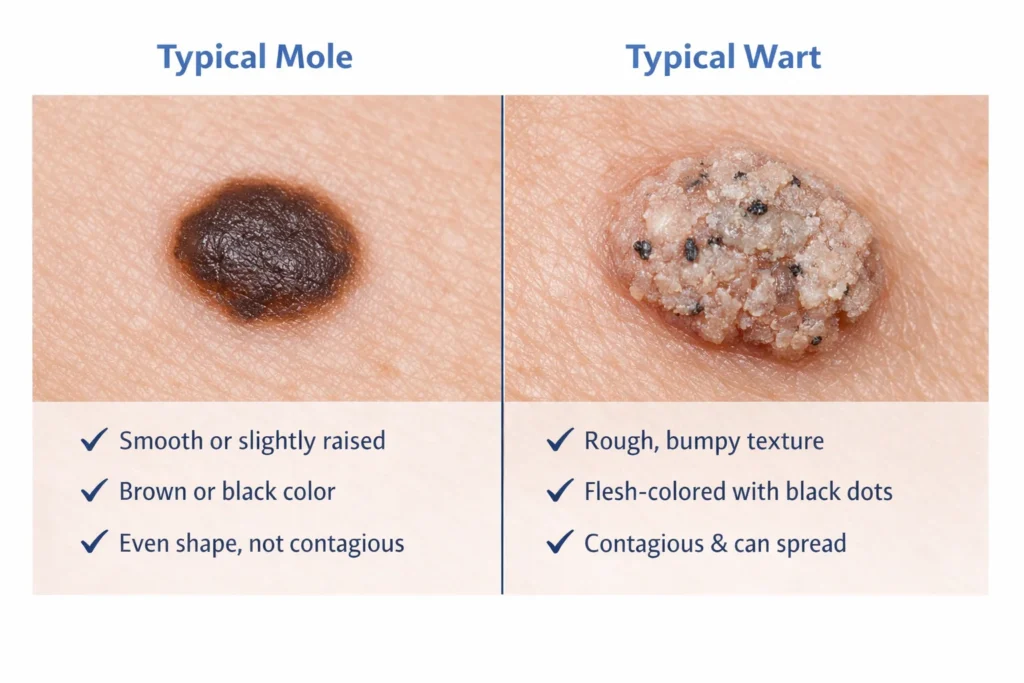
Skin growths are common, but telling the difference between a mole and a wart isn’t always easy. While both may appear as small bumps on the skin, they have very different causes, risks, and treatment approaches. Misidentifying one for the other can lead to delayed care—or unnecessary concern.
At OC MedDerm, skin lesions are evaluated daily by Dr. Parvin Shafa, an experienced dermatologist with over 25 years of clinical experience in medical and surgical dermatology. Many patients seek care simply because they want clarity—and the confidence that comes with an expert diagnosis.
This guide explains how to tell a mole from a wart, when professional evaluation is important, and what safe, physician-performed treatment options are available.
At first glance, moles and warts can look similar—especially if they are small, raised, or located in hard-to-see areas. However, the distinction is medically important.
Some moles are completely harmless, while others require close monitoring or removal due to skin cancer risk. Warts, by contrast, are caused by a virus and may spread if left untreated.
Early evaluation by a qualified dermatologist allows for accurate diagnosis, timely treatment, and peace of mind.
Yes. Certain warts may appear smooth or pigmented, while some moles can become raised or textured over time. This visual overlap is one of the most common reasons patients seek professional evaluation at OC MedDerm.
A mole (medically known as a nevus) is a cluster of pigmented skin cells. Most adults have between 10 and 40 moles, and the majority are benign.
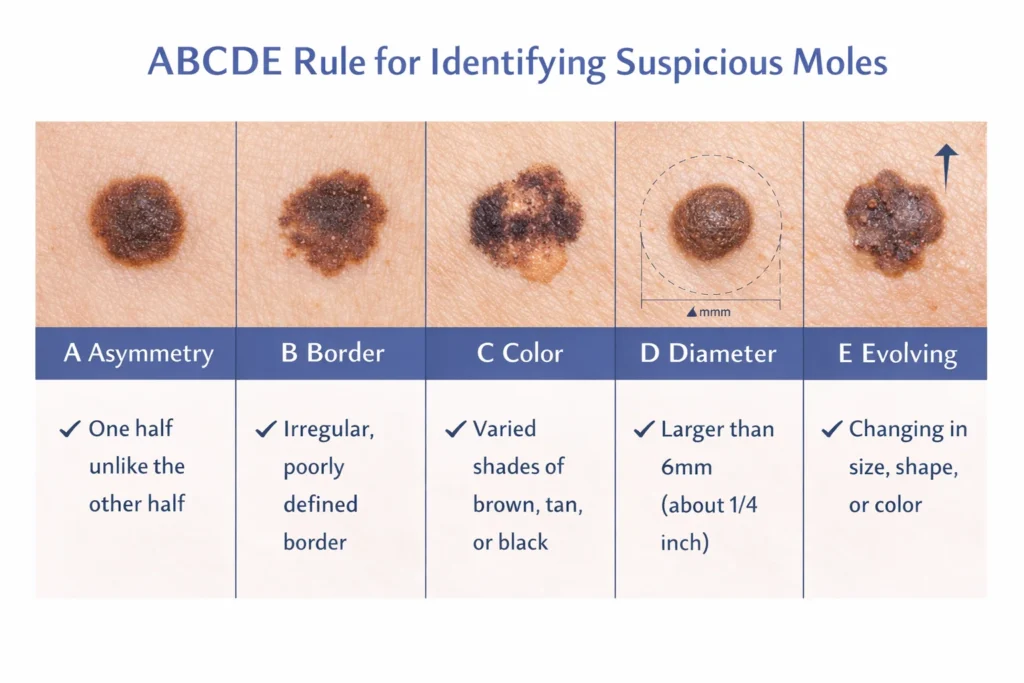
Dermatologists use the ABCDE rule to evaluate moles:
Any of these signs should be evaluated by a dermatologist.
A wart is a viral skin growth caused by certain strains of the human papillomavirus (HPV). Unlike moles, warts are contagious and may spread through direct or indirect contact.
HPV enters the skin through microscopic breaks, triggering rapid skin cell growth that forms a wart.
Yes. Warts can spread:
| Feature | Mole | Wart |
|---|---|---|
| Cause | Pigmented skin cells | Viral infection (HPV) |
| Contagious | No | Yes |
| Texture | Smooth or slightly raised | Rough or cauliflower-like |
| Color | Brown, black, tan, skin-colored | Skin-colored, white, or gray |
| Risk | Some may be cancerous | Usually benign but may spread |
Many skin lesions don’t follow classic patterns. At OC MedDerm, Dr. Parvin Shafa uses advanced clinical evaluation methods, including dermoscopic assessment and biopsy when appropriate, to ensure accurate diagnosis.
Professional evaluation is recommended if a skin growth:
Early diagnosis allows for simpler treatment and better outcomes.
Mole removal may be recommended for medical, cosmetic, or diagnostic reasons.
Over-the-counter treatments may:
Dermatologist-directed care is safer, more effective, and precise.
Is a mole or wart painful?
Most are painless, but pain can indicate irritation or the need for evaluation.
Can a wart turn into a mole?
No. They are completely different skin growths.
Are all moles harmless?
Most are benign, but some require monitoring or biopsy.
Will removal leave a scar?
When performed by a dermatologist, scarring is typically minimal.
How long does removal take?
Most procedures are completed within 15–30 minutes.
While online resources can help you understand the difference between a mole and a wart, accurate diagnosis requires clinical experience. With over 25 years of dermatology experience, Dr. Parvin Shafa provides careful evaluation focused on safety, accuracy, and long-term skin health.
Schedule a professional skin consultation with Dr. Parvin Shafa at OC MedDerm to accurately diagnose and safely treat moles or warts.
Book a consultation at OC Medderm | Irvineskin Today for Medical, Surgical, and Cosmetic Dermatology in Irvine & Orange County, CA.
We are experts in Acne, Pinch blepharoplasty, Ear lobe repair, Xanthelasma repair, Syringomas removal, mole removal, Keloid removal, Body and face piecing or piercing repair or removal, lump and bumps removal, Acne scar removal, Spider vein treatment, fungal infection, Co2 resurfacing, Warts and more.
You can schedule an appointment or call us now for all the dermatology treatments. We are located at 113 Waterworks Way 100, Irvine, Orange County CA, We Are Dedicated to Providing the Best & Transparent Dermatology Care for your skin.
Call us when you want!