Dr. Parvin Shafa | February 12, 2026
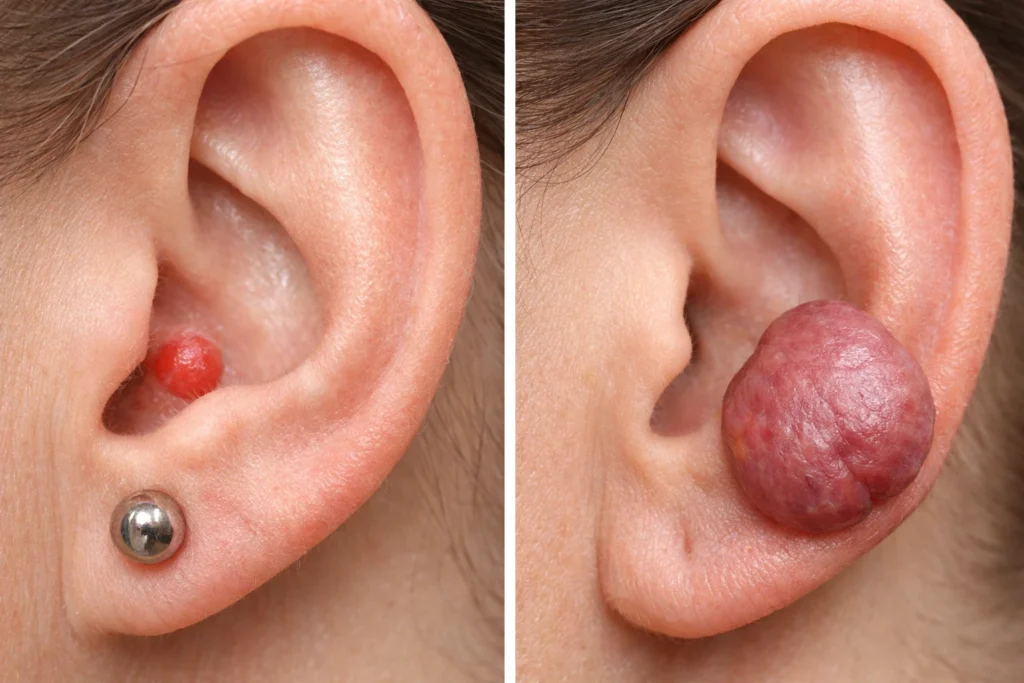
Not every bump that forms after a piercing is a keloid. In fact, many people searching online for “how to get rid of a piercing bump” are dealing with irritation or a minor scar — not a true keloid. Understanding the difference is important because treatment approaches vary significantly.
Dermatology clinics across Southern California frequently evaluate piercing-related bumps that patients are unsure about. Early identification can help prevent unnecessary treatments and reduce the risk of long-term scarring.
A piercing bump is a general term used to describe swelling or raised tissue that forms near a piercing site. It may be caused by:
These bumps often appear within weeks of getting pierced and may improve with proper care.
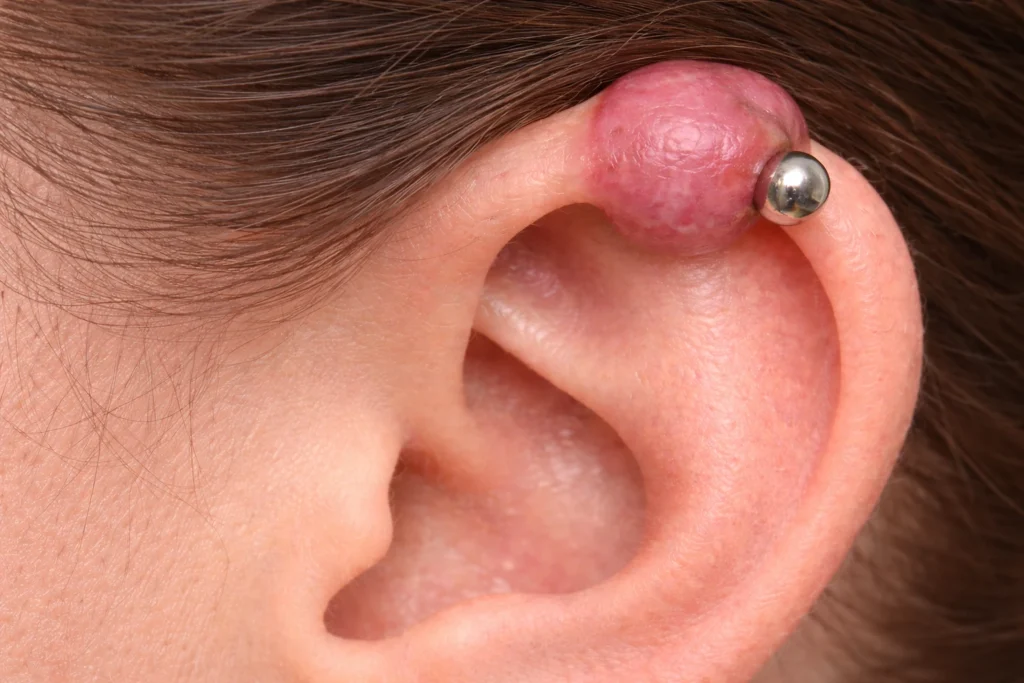
A keloid is a firm, raised overgrowth of scar tissue that extends beyond the original piercing site. Unlike a typical piercing bump, a keloid:
Keloids are more common in individuals with a family history of abnormal scarring and tend to form on areas like the earlobes, chest, and shoulders.
Ear piercings are one of the most common sites for keloid formation. The earlobes are frequently pierced, making them a common area for scar tissue overgrowth. Cartilage piercings tend to heal more slowly, which may increase inflammation and abnormal scar formation. Additionally, areas under tension or repeated movement may scar more aggressively in individuals prone to keloids.
| Feature | Piercing Bump | Keloid |
| Growth Pattern | Usually stabilizes or improves | Continues enlarging |
| Size | Small and localized | Extends beyond original piercing |
| Texture | Soft to slightly firm | Firm, thick, rubbery |
| Timeline | Appears within weeks | Develops gradually and persists |
| Self-Resolution | Often improves with care | Rarely resolves without treatment |
If a bump continues growing months after piercing, professional evaluation is recommended.
Most irritation-related bumps improve with simple care.
Avoid harsh chemicals, alcohol, or aggressive squeezing, as these may worsen inflammation.
If the bump persists or enlarges, medical evaluation may be necessary to rule out a keloid.
True keloids generally do not resolve with home remedies alone. While silicone gels or sheets may help soften early scar tissue, established keloids often require professional treatment.
Common myths to avoid:
These approaches rarely eliminate keloids and may worsen irritation.
For comprehensive treatment options, visit our guide on keloid scar treatment for patients across California.
While prevention is not always possible, certain steps may reduce risk:
Early intervention is often easier than treating a fully developed keloid.
You should consider a professional evaluation if:
Patients from Irvine and throughout Southern California often seek evaluation when at-home care does not improve the bump. Early assessment can help determine whether it is irritation, hypertrophic scarring, or a true keloid.
At OC MedDerm in Irvine,CA, Dr. Parvin Shafa brings over 25 years of dermatology experience evaluating and managing complex scars, including piercing-related keloids. Treatment plans are personalized based on scar size, location, skin type, and history.
If you are unsure whether your piercing bump is a keloid, scheduling a professional evaluation can provide clarity and guide the safest next steps.
Book an Appointment – https://irvineskin.com/inquiry-now/
Call Our Office – +1(949) 551-1113
Is a piercing bump always a keloid?
No. Many piercing bumps are irritation or hypertrophic scars, not true keloids.
How long does a piercing bump last?
Mild irritation bumps may improve within weeks, while keloids persist and may grow.
Can tea tree oil remove a keloid?
There is no strong medical evidence that essential oils remove established keloids.
Should I remove my earring if I have a bump?
Not always. Removing jewelry too early may trap infection or worsen healing. Professional advice is recommended.
Book a consultation at OC Medderm | Irvineskin Today for Medical, Surgical, and Cosmetic Dermatology in Irvine & Orange County, CA.
We are experts in Acne, Pinch blepharoplasty, Ear lobe repair, Xanthelasma repair, Syringomas removal, mole removal, Keloid removal, Body and face piecing or piercing repair or removal, lump and bumps removal, Acne scar removal, Spider vein treatment, fungal infection, Co2 resurfacing, Warts and more.
You can schedule an appointment or call us now for all the dermatology treatments. We are located at 113 Waterworks Way 100, Irvine, Orange County CA, We Are Dedicated to Providing the Best & Transparent Dermatology Care for your skin.
Call us when you want!