Dr. Parvin Shafa | March 5, 2026
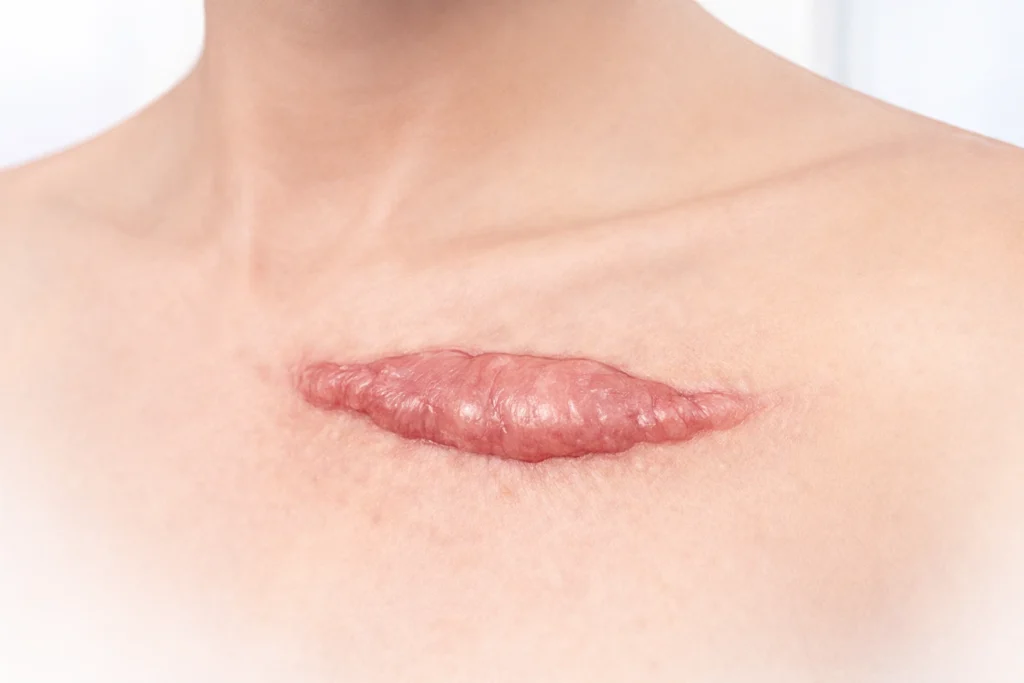
Chest keloids are a common dermatologic concern and one of the most frequent areas where keloid scars develop. Unlike normal scars that gradually fade, keloids grow beyond the original wound and can continue enlarging over time.
These scars may appear raised, thick, and firm, and sometimes cause itching, tenderness, or discomfort. Chest keloids can develop after acne, surgery, minor injuries, or skin irritation. Because the chest experiences constant movement and skin tension, scars in this area are more likely to become persistent.
At OC MedDerm in Irvine, Orange County, CA, patients often seek evaluation and treatment for chest keloids to improve both symptoms and cosmetic appearance.
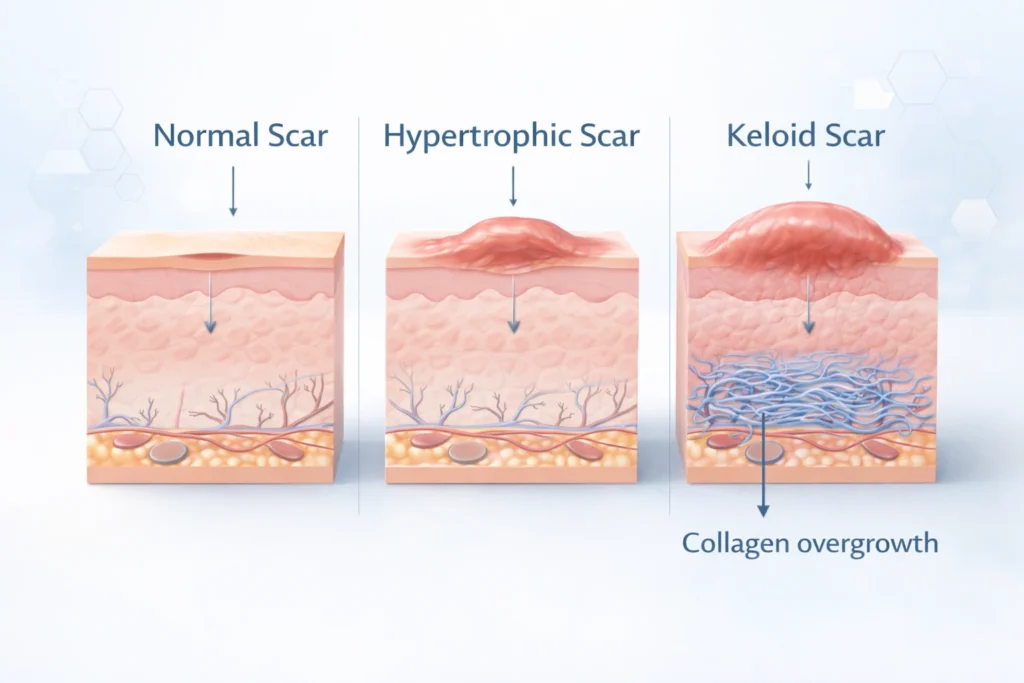
A keloid is an abnormal scar that forms when the body produces excess collagen during the healing process. Instead of stopping once the wound closes, the scar tissue continues to grow.
Chest keloids often appear:
Unlike hypertrophic scars, which remain within the boundaries of the original wound, keloids extend beyond it and rarely flatten on their own.
Several factors make the chest more prone to keloid formation.
The chest area stretches constantly due to breathing, arm movement, and upper body activity. Increased tension during wound healing can stimulate excessive collagen production.
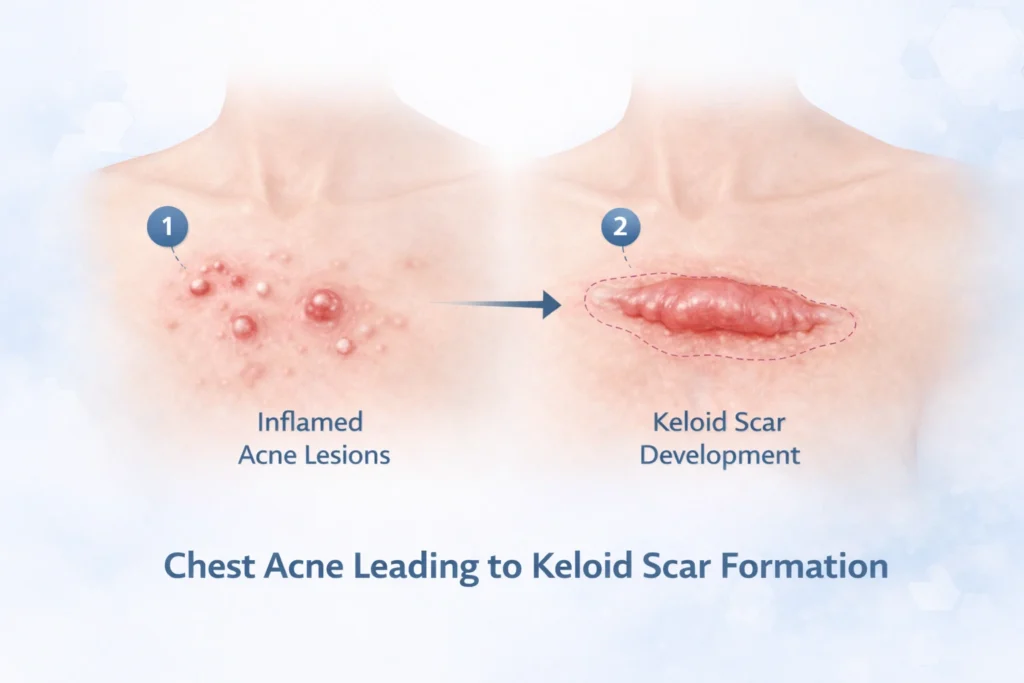
Inflammatory acne lesions on the chest can trigger abnormal scarring. Deep or frequently irritated acne bumps may increase the risk of keloid development.
Procedures involving the chest — including skin lesion removal or other dermatologic treatments — may occasionally lead to keloid formation in individuals who are prone to abnormal scarring.
People with a personal or family history of keloids have a higher chance of developing them on the chest, shoulders, jawline, or back.
Keloids occur more frequently in individuals with darker skin tones, although they can affect people of all skin types.
While some keloids cause only cosmetic concerns, others can produce uncomfortable symptoms. Patients commonly report:
Because clothing frequently rubs against the chest, irritation from fabric may sometimes worsen symptoms.
In most cases, chest keloids can be diagnosed through a clinical skin examination performed by a dermatologist. The appearance of the scar and the patient’s medical history are usually enough to confirm the diagnosis.
Early evaluation is important because smaller keloids are often easier to manage than large or long-standing scars.
Treatment for keloids varies depending on the size, symptoms, and history of the scar. Many patients benefit from a combination of therapies rather than a single treatment approach.
Steroid injections are one of the most commonly used treatments for keloids. These injections help:
Multiple treatment sessions are often required for optimal results.
Surgical removal may be considered for larger keloids. However, surgery alone can carry a higher risk of recurrence. For this reason, dermatologists typically combine surgical excision with additional therapies to reduce the chance of regrowth.
Silicone sheets or gels are commonly recommended to help:
Consistent use over time is important to achieve the best results.
In some cases, specialized techniques that reduce tension on healing skin may help prevent the scar from worsening.
Because every scar behaves differently, many patients achieve the best outcomes with personalized treatment plans that combine several therapies.
You can learn more about available options by exploring keloid scar treatment in Irvine offered by experienced dermatology providers.
Keloids have a known risk of recurrence, especially if treatment is incomplete or if underlying risk factors remain present.
However, recurrence rates can be significantly reduced with:
A qualified dermatologist can develop a long-term plan to help minimize recurrence and manage symptoms effectively.
Consider scheduling a dermatology evaluation if:
Early care often leads to better outcomes and can help prevent the scar from becoming larger or more symptomatic.
At OC MedDerm, Dr. Parvin Shafa brings over 25 years of dermatology experience evaluating and treating complex scars, including chest keloids. Patients from across Irvine and Orange County seek expert guidance for individualized treatment plans tailored to their skin type, scar history, and aesthetic goals.
If you are concerned about a chest keloid or exploring treatment options, a professional consultation can help determine the most appropriate next steps.
Book an Appointment – https://irvineskin.com/inquiry-now/
Call Our Office – +1(949) 551-1113
Chest keloids rarely disappear without treatment. Because they continue producing excess collagen, they usually remain raised and may gradually enlarge over time.
Keloids are benign scars and are not cancerous. However, they may cause itching, discomfort, or cosmetic concerns depending on their size and location.
Common triggers include:
Yes. Dermatologists may treat keloids using injections, scar therapies, or surgical techniques combined with other treatments to reduce recurrence.
Book a consultation at OC Medderm | Irvineskin Today for Medical, Surgical, and Cosmetic Dermatology in Irvine & Orange County, CA.
We are experts in Acne, Pinch blepharoplasty, Ear lobe repair, Xanthelasma repair, Syringomas removal, mole removal, Keloid removal, Body and face piecing or piercing repair or removal, lump and bumps removal, Acne scar removal, Spider vein treatment, fungal infection, Co2 resurfacing, Warts and more.
You can schedule an appointment or call us now for all the dermatology treatments. We are located at 113 Waterworks Way 100, Irvine, Orange County CA, We Are Dedicated to Providing the Best & Transparent Dermatology Care for your skin.
Call us when you want!